Funeral Program Maker
Menu
Eulogy and funeral speech delivery

How to Deliver a Eulogy

How to start a eulogy, a simple spoken format, and how to pace, pause, and finish if you cry. Write the draft first, then prepare a large-type reading copy.

  • Funeral speech opening and format
  • Practice, pacing, and pauses
  • Tears, backup reader, and close
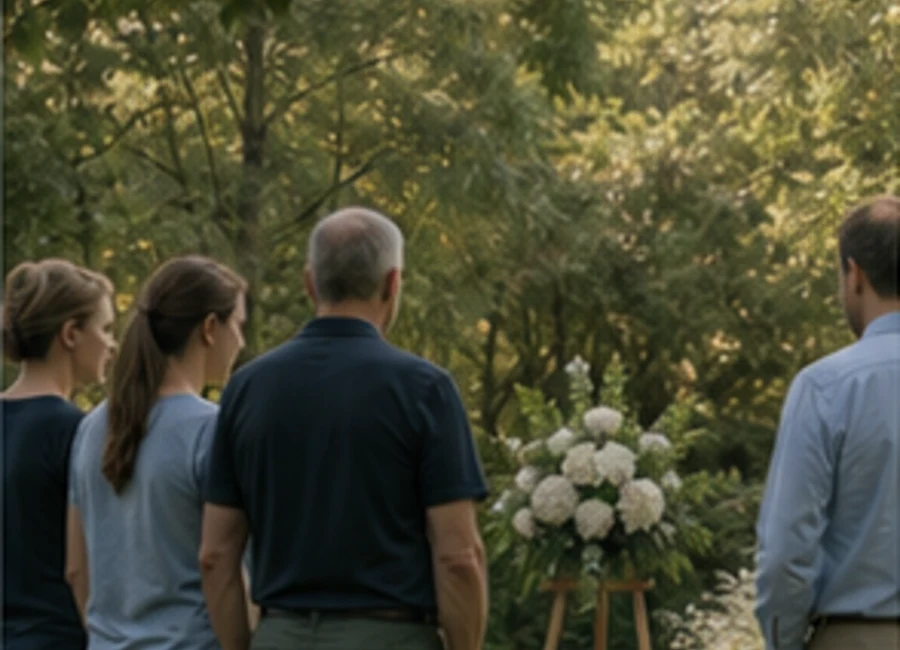
A small group standing together at a garden memorial service in soft daylight.
Practice, then speak in the room
Quick answer

How do you start and deliver a eulogy?

A eulogy is the funeral speech itself, usually three to five minutes. Start by saying your name, your relationship, and thank you for coming. Read from a large-type copy, pause at the marked lines, and have a backup reader if you cannot finish. Write the wording first, then use this page to practice and deliver it.

Draft the tribute with How to Write a Eulogy before you print the reading copy.

PartWhat to include or confirm
Opening said aloudName, relationship, thank you, then one true sentence before the first story.
Spoken formatOpening, one life thread, 1–2 stories, qualities, close. Stop there.
TimeThree to five minutes unless the officiant gave you a shorter slot.
If you cryPause, drink water, skip to the closing sentence, or let the backup reader finish.

By the Funeral Program Maker Editorial Team · Published · Updated · Editorial standards

Delivery flow

Prepare the copy, practice out loud, then give the room a pace it can hold.

This page is about giving the funeral speech, not drafting it. Bring a finished tribute, then make it readable under stress.

1

Prepare the reading copy

Do not read from your phone if you can avoid it. Print the final wording in large type, double-spaced, on paper you can hold in one hand. Mark pauses with a slash. Put the closing sentence at the top of the last page so you can skip ahead without shuffling. Number the pages.

Prompt

Large type, double spacing, marked pauses, numbered pages, closing sentence at the top of the last page.

2

Practice out loud

Stand up. Read the whole piece once at the speed you will use in the room. Time it. Cut anything you trip on. Practice the first sentence and the last sentence extra times. If a name or place is easy to mis-say, write it phonetically in the margin.

Prompt

Read-aloud time, one sentence to cut, phonetic spellings in the margin.

3

Plan the opening you will actually say

The first spoken line is a greeting, not a quotation. Look at the family, then say your name, your relationship, and thank you for being here. Then give one true sentence about the person before the first story. Do not start with an apology for being nervous. The writing guide has prompts for the wording; this step is about delivering that first breath without rushing.

Prompt

My name is ___ . I am ___'s ___ . Thank you for being here. I want to remember ___ .

4

Pace the middle with pauses

After each story, stop for a count of two. Let people laugh if they laugh. Do not stack a second memory onto the first until the room has caught up. Keep your eyes on a friendly face for a moment at each pause. If there is a microphone, stay the same distance from it and do not turn your head away while speaking.

Prompt

Pause after story one. Pause after the qualities. Do not add a new biography in the middle.

5

Plan for tears

Crying is common and does not mean you should sit down immediately. Pause, drink water, breathe, and start the next short sentence. Agree in advance that a second reader can step in. Give that person the same printed copy. If you cannot continue, say the closing sentence and sit down. The officiant can take the service from there.

Prompt

Backup reader name, water at the lectern, and the closing sentence you can still say.

6

Close, then stop

End with one sentence the room can hold: thank you, we love you, rest well, we will carry this forward. Do not add a new story after the close. Do not explain that you are done. Say the line, look up, and sit down. If the program lists you, you do not need to announce the next speaker.

Prompt

One closing sentence. Then sit down.

Still need the written draft?

Use the writing guide for structure and prompts, then come back to this page to practice the spoken copy.

Open the writing guide
FAQ

Common questions

How do you start a eulogy?

Say your name, your relationship, and thank people for coming. Then give one true sentence about the person before the first story. You do not need a famous quotation to begin.

How do I begin a eulogy if I am nervous?

Write the first sentence at the top of the page in larger type than the rest. Practice it standing up. Look at one family member, say the sentence, and pause. The rest of the copy is there if you need to look down.

What is the format of a eulogy?

A simple spoken format is opening, one life thread, one or two stories, a few qualities those stories already proved, and a short close. Ask the officiant how many minutes you have. Draft the wording on the writing guide; use this page for how to say it.

Is a funeral speech the same as a eulogy?

In practice, yes. A eulogy is the funeral speech given in honor of the person who died. Families and officiants use both words for the same few minutes at the lectern. Other speaking moments at a service — a welcome, a scripture reading, or a short remembrance from the floor — are usually shorter and are not called eulogies.

How long should a eulogy take?

Most spoken eulogies work well at three to five minutes. Time a read-aloud, not a silent read. If several people will speak, ask for a shorter slot so the service can hold all of them.

What if I cry during the eulogy?

Pause, drink water, and start the next short sentence. If you cannot continue, say the closing line you marked at the top of the last page, or let the backup reader finish. Families often agree on that plan in advance.

Should I memorize the eulogy?

No. Memorizing adds pressure. Read from a large-type copy. Know the opening and the close well enough that you can look up. That is enough.